
Nexus Neuropsychiatry PLLC
(585) 460-9835
MON – FRI: 10am – 7:00pm
SAT – SUN: Closed
*By Appointment Only
Share Article
Article medically reviewed by Dr. Shane Stegen of Nexus Neuropsychiatry PLLC
For a long time, treating depression meant one of two things: medication or talk therapy. Both help a lot of people, and both leave a lot of people still struggling. That has been frustrating for patients and for the clinicians treating them. Things are changing though. Advances in neuroscience have given us tools that go after the brain circuits involved in depression directly, and one of the best studied is transcranial magnetic stimulation, or TMS. Here's what it is, where it came from, and how it fits into care.
TMS Therapy Quick Summary
A noninvasive, targeted approach that works directly with brain circuits when standard depression treatments haven't been enough.
-
What it is
A noninvasive treatment using magnetic pulses to stimulate mood-regulating brain networks—with no surgery, anesthesia, or systemic pills.
-
How it works
Pulses target the prefrontal cortex, stimulating neurons to fire and prompting neuroplasticity over several weeks of sessions.
-
Side effects & routine
Avoids whole-body antidepressant side effects like weight gain or drowsiness; main effects are mild scalp discomfort or brief headaches.
-
Who it's for
FDA-cleared for adults with treatment-resistant depression or OCD who have not seen sufficient improvement from medication.
Every patient starts with a comprehensive evaluation to confirm candidacy, check safety factors (such as seizure history or metal implants), and design a personalized plan.
So What Is TMS?
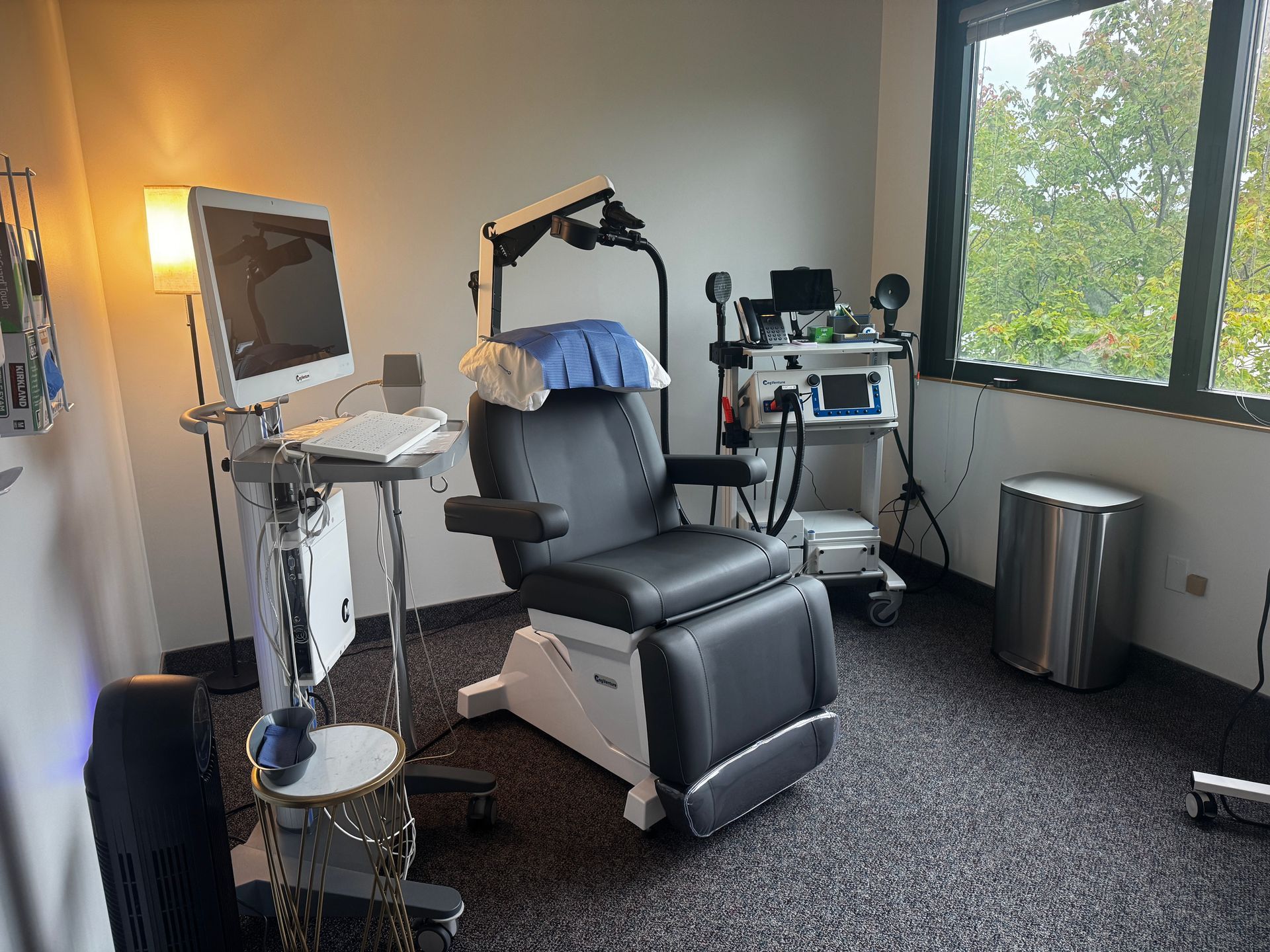
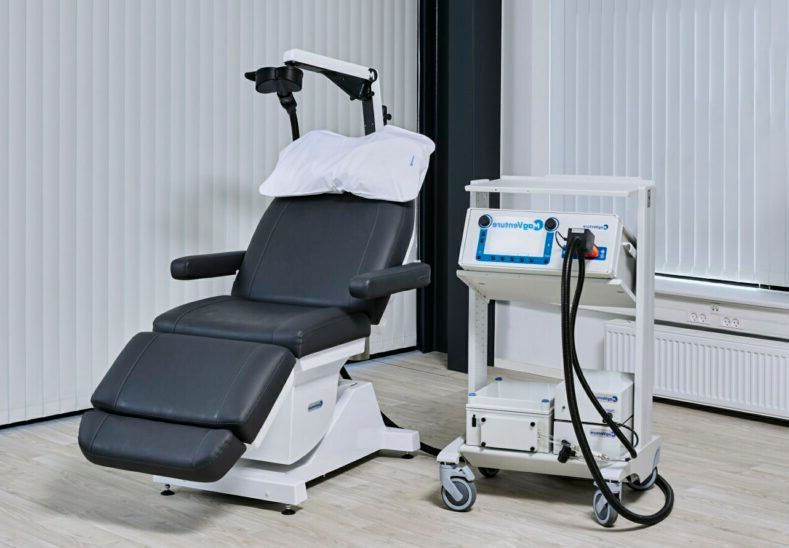
Transcranial magnetic stimulation is a noninvasive treatment that uses magnetic pulses to stimulate specific areas of the brain. A coil rests against your scalp and delivers short pulses to a region involved in mood regulation. The magnetic field passes through the skull and activates the nerve cells underneath.
There's no surgery, no anesthesia, and no medication in the treatment itself. You're awake in a chair in the office the whole time. Think of the difference between taking a pill for a sore knee and getting treatment aimed at the knee. A pill travels through your whole body. TMS goes to one spot.
Where TMS Came From
From Faraday to FDA Clearance
The science behind TMS is older than most people expect.
-
1830s
Michael Faraday discovers electromagnetic induction: a changing magnetic field can generate an electrical current in a nearby conductor.
-
1985
Anthony Barker and colleagues in Sheffield, England build a magnetic stimulator powerful enough to stimulate the human cerebral cortex without surgery. [1]
-
1995
Researchers first report using repetitive TMS to improve mood in depression. [2]
-
October 2008
The FDA clears the first TMS device for adults with major depression who had not improved with an antidepressant. [3]
-
Today
TMS is also cleared for OCD, and newer protocols have shortened sessions and, in some cases, compressed the schedule.
Nerve cells communicate with electrical signals, so Faraday's principle is what makes TMS possible.
The science goes back further than most people expect. In the 1830s, Michael Faraday discovered electromagnetic induction: a changing magnetic field can generate an electrical current in a nearby conductor. Nerve cells communicate with electrical signals, so that principle is what makes TMS possible.
It took until 1985 for Anthony Barker and his colleagues in Sheffield, England, to build a magnetic stimulator powerful enough to stimulate the human cerebral cortex without surgery.[1] Researchers first reported using repetitive TMS to improve mood in depression in 1995.[2] Larger trials followed, and in October 2008 the FDA cleared the first TMS device for adults with major depression who had not improved with an antidepressant.[3] Since then, TMS has also been cleared for OCD, and newer protocols have shortened sessions and in some cases compressed the schedule.
How Does TMS Work?
Depression involves more than one chemical. It involves networks, groups of brain regions that work together to regulate mood, motivation, and thinking. In depression, activity in some of those networks appears to be disrupted. TMS targets an area of the left prefrontal cortex that connects with those mood-regulating networks.
Each pulse stimulates nearby neurons to fire. Repeated over many sessions, that stimulation appears to change how those circuits communicate, which is why treatment is spread over weeks instead of one visit. The brain's ability to rewire its connections is called neuroplasticity, and it's the leading explanation for why repeated stimulation can lead to lasting change.
What do we know for sure? Controlled trials show TMS helps many people with depression.[4] What are researchers still working out? Exactly which circuits matter most for which patients, and why some people respond and others don't. That's an active area of research, and I'd rather tell you that than pretend we have every answer.
How is TMS Different from Antidepressants?
TMS vs. Antidepressants
Two different ways of delivering treatment. TMS is another option, not a replacement for everything else.
| Compare | Antidepressants | TMS therapy |
|---|---|---|
| How it reaches you | Antidepressants
Whole body
Circulates through your bloodstream.
|
TMS therapy
One area
Delivered to a specific area of the brain.
|
| Side effects | Antidepressants
Some people deal with weight changes, drowsiness, or sexual side effects.
|
TMS therapy
Some scalp discomfort or headache, mostly early in treatment.
|
| Time commitment | Antidepressants
A pill takes five seconds.
|
TMS therapy
A block of your schedule, with sessions most weekdays for several weeks.
|
| Role in care | Antidepressants
Helps a lot of people, and leaves a lot of people still struggling.
|
TMS therapy
Often used alongside medication and therapy, for when what you have tried has not been enough.
|
Individual results vary. TMS is not appropriate for everyone.
Antidepressants circulate through your bloodstream and affect your whole body, which is why some people deal with side effects like weight changes, drowsiness, or sexual side effects. TMS delivers treatment to one area of the brain, so it doesn't have those whole-body effects. Its side effects are different: some scalp discomfort or headache, mostly early in treatment.
Delivery is different too. A pill takes five seconds. TMS takes a block of your schedule, with sessions most weekdays for several weeks. And TMS is another option, not a replacement for everything else. Plenty of people use it alongside medication and therapy. It's a tool for when what you've tried hasn't been enough.
Who Might Benefit from TMS?
TMS is FDA-cleared for major depression in adults who haven't gotten enough relief from medication, and for OCD. If you've tried several antidepressants without enough improvement, you may have what clinicians call treatment-resistant depression, and TMS may be worth discussing.
Whether it's right for you takes an individual evaluation. We look at your history, your diagnosis, your medical conditions, and safety factors like a history of seizures or metal implants in or near the head. That's why every patient at Nexus starts with a
consultation
before anything else.
Finding Out Whether TMS Is Right for You
TMS gave psychiatry something it didn't have for decades: a way to treat depression by working with the brain's circuits directly, without surgery, anesthesia, or another pill. No treatment works for everyone, and TMS is no exception. If your depression hasn't responded the way you hoped, contact Nexus Neuropsychiatry in Rochester, NY for an evaluation and we'll help you figure out whether TMS therapy makes sense for you.
IV ketamine is used off-label for depression and other psychiatric conditions. While growing evidence supports its use, it has not received FDA approval for these indications. Your provider will discuss what the current research shows and what it does not. Spravato (esketamine) is available only through certified healthcare settings under the FDA's REMS program.
References
- Barker AT, Jalinous R, Freeston IL. Non-invasive magnetic stimulation of human motor cortex. Lancet. 1985;1(8437):1106-1107.
- George MS, Wassermann EM, Williams WA, et al. Daily repetitive transcranial magnetic stimulation (rTMS) improves mood in depression. Neuroreport. 1995;6(14):1853-1856.
- Depression treatment turns a neuromodulatory corner: FDA clears TMS device. Psychiatric Times. 2008;25(13).
- George MS, Lisanby SH, Avery D, et al. Daily left prefrontal transcranial magnetic stimulation therapy for major depressive disorder: a sham-controlled randomized trial. Arch Gen Psychiatry. 2010;67(5):507-516.