
Nexus Neuropsychiatry PLLC
(585) 460-9835
MON – FRI: 10am – 7:00pm
SAT – SUN: Closed
*By Appointment Only
Share Article
Article medically reviewed by Dr. Shane Stegen of Nexus Neuropsychiatry PLLC
If you've looked into TMS, one thing probably stood out: the schedule. Standard treatment means showing up most weekdays for several weeks, and for people juggling work, kids, or a long drive, that's a real barrier. That's a big reason clinicians and researchers have been working on accelerated TMS, which packs treatment into a shorter window. It's an exciting development, and it's also a category where details matter a lot, because these protocols aren't interchangeable. Here's what accelerated TMS is, why people are developing it, and what to think about if you're considering it.
Accelerated TMS at a Glance
The short version of what accelerated TMS is, why it exists, and what to ask before you start.
-
What it is
Several TMS sessions in one day, so the treatment course fits into fewer days.
-
Why it matters
Fewer appointment days for people balancing work, family, or a long drive. Some protocols may also bring improvement sooner.
-
Keep in mind
Accelerated TMS is a category, not one treatment. Each protocol has to be judged on its own evidence.
-
At Nexus Neuropsychiatry
Non-FDA accelerated protocols lasting one to five or more days, with up to 10 treatments per day, including off-label neuroplastogen-enhanced options.
Individual results vary. TMS is not appropriate for everyone.
What is Accelerated TMS?
Conventional TMS therapy typically means one session a day, five days a week, for several weeks. Accelerated TMS delivers multiple sessions in a day, which compresses at least part of the treatment course into a shorter period. Depending on the protocol, that might mean a handful of intensive days or a series of treatment days spread across a couple of weeks.
The most important thing to understand is that accelerated TMS describes a whole category of protocols that differ in how stimulation is delivered and how treatment is scheduled. Telling someone you had accelerated TMS says about as much as telling them you took an antidepressant.
Why Accelerate Your TMS Treatment?
Convenience comes first. Daily appointments for weeks are hard for people with jobs, family responsibilities, or transportation challenges, and fewer treatment days can make TMS realistic for more of them. A shorter initial treatment period may also help more people finish a course. Then there's speed. Some studies suggest certain accelerated protocols can bring improvement sooner. And researchers are asking bigger questions about how the timing, frequency, and total dose of stimulation shape neuroplasticity and response.
Faster delivery doesn't automatically mean faster or better results, though. Each protocol has to be judged on its own evidence.
How Does Accelerated TMS Work?
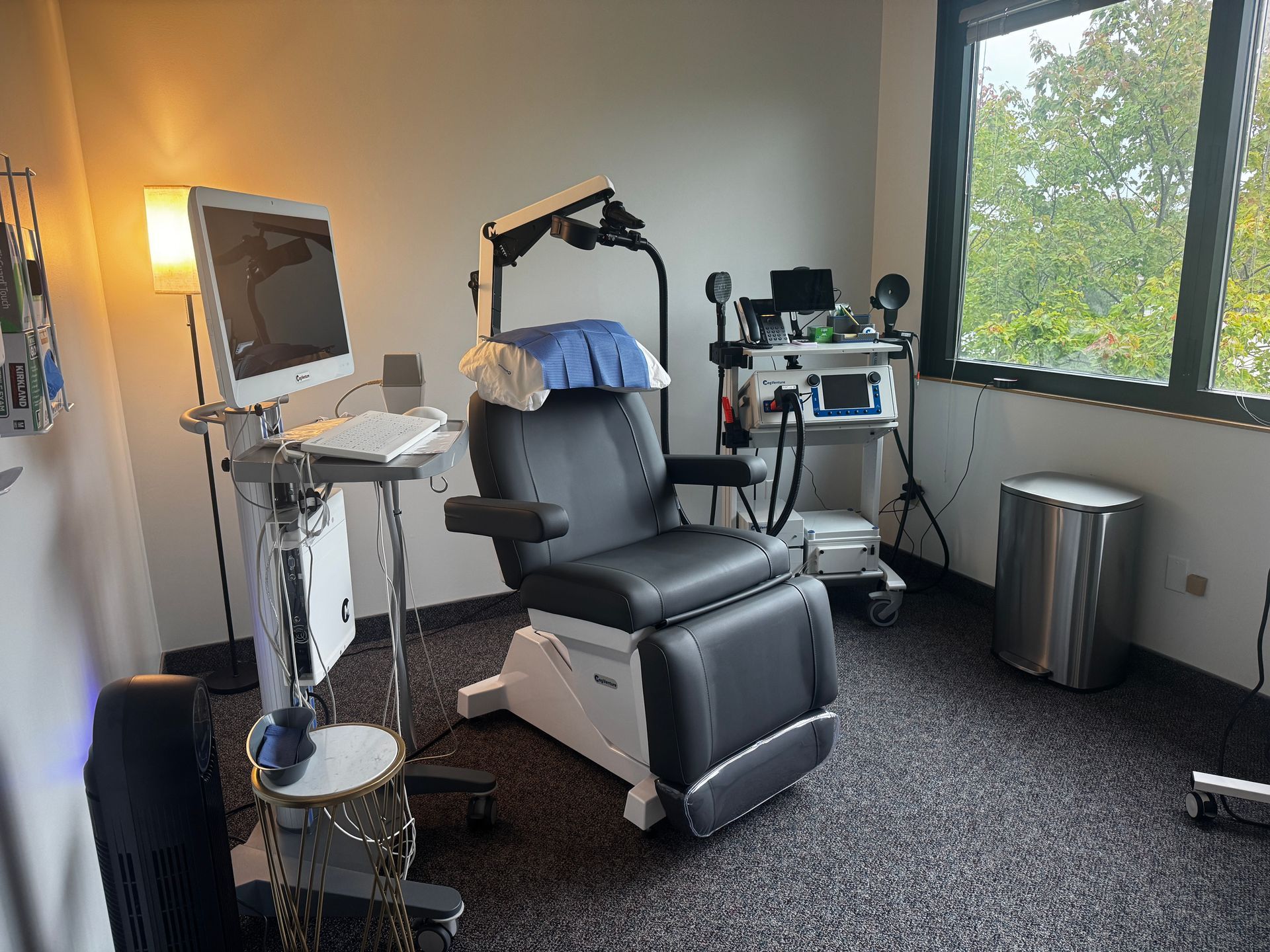
The basic science is the same as standard TMS. Magnetic pulses induce small electrical currents in targeted brain tissue. Most depression protocols aim at the left dorsolateral prefrontal cortex or the connected networks that help regulate mood. Many accelerated protocols use intermittent theta burst stimulation, or iTBS, a patterned form of stimulation that can deliver a session in a few minutes instead of the longer sessions used with traditional high-frequency TMS.
Researchers are studying whether sessions delivered close together can produce effects comparable to, or even faster than, conventional schedules.
Accelerated protocols also differ in pulse dose, stimulation intensity, how the treatment target is chosen, and the technology used, so calling it regular TMS on fast-forward undersells the differences.
How Accelerated Protocols Differ
There's no single "accelerated TMS." Protocols can differ in how many days treatment spans (anywhere from a single intensive day to a series of days over a couple of weeks), how many sessions are delivered per day, the total dose of stimulation, and whether the treatment target is standardized or chosen individually, sometimes with the help of brain imaging. Some approaches are built on newer or investigational platforms; others adapt protocols that already have an established evidence base and regulatory clearance for standard TMS.
Some accelerated protocols also pair stimulation with medications intended to support neuroplasticity. That combination is generally used off-label, and the evidence for it is still developing. Regulatory status varies too: some accelerated protocols have FDA clearance for specific indications, while others remain investigational and are offered mainly in research settings.
At Nexus Neuropsychiatry, we offer non-FDA accelerated protocols, including neuroplastogen-enhanced versions, ranging from one to five or more days with up to 10 treatments per day. We choose among them based on your history and goals. The medications used in enhanced protocols are prescribed off-label, and the evidence for those combinations is still developing. With any provider, ask exactly which protocol they use, whether it's FDA-cleared for your situation, and what the evidence is for it.
Six Ways Accelerated Protocols Can Differ
Two people can both say they had accelerated TMS and have had very different treatments.
-
Treatment days
Anywhere from a single intensive day to a series of days over a couple of weeks.
-
Sessions per day
How many sessions are delivered on each treatment day.
-
Stimulation dose
Total dose across the course, plus pulse dose and stimulation intensity.
-
How the target is chosen
A standardized target, or one chosen individually, sometimes with the help of brain imaging.
-
Technology
Some build on newer or investigational platforms. Others adapt protocols already established for standard TMS.
-
Medications and regulatory status
Some pair stimulation with off-label medications. Some protocols are FDA-cleared for specific uses, while others remain investigational.
Does Accelerated TMS Work Better Than Conventional TMS?
We don't know for sure that it does. Accelerated protocols are built to cut treatment time and possibly speed improvement, and some have shown promising results. Research doesn't establish that every accelerated protocol is more effective than conventional TMS, and results from one protocol can't be carried over to another, because schedules, doses, targeting methods, and devices differ. Questions about durability, the best dosing, who benefits most, and maintenance are still open. The question that matters is whether a particular protocol gives safe, meaningful, lasting improvement.
Who Might Consider Accelerated TMS?
People who may want to explore it include those with treatment-resistant depression, people who can't attend daily appointments for several weeks, people who can handle an intensive schedule, and people for whom a specific protocol is clinically appropriate and available. It isn't right for everyone. We look at your psychiatric and medical history, how you've responded to past treatments, the protocol's eligibility criteria, and the available evidence. Intensive treatment days ask a lot of your time and energy, so it's worth being honest about what you can manage.
Is Accelerated TMS Worth Exploring for You?
It may be worth a conversation if you:
- Live with treatment-resistant depression
- Can't attend daily appointments for several weeks
- Can handle an intensive treatment schedule
- Have a protocol that is clinically appropriate and available to you
What we review with you
- Your psychiatric and medical history
- How you've responded to past treatments
- The protocol's eligibility criteria
- The available evidence
Accelerated TMS isn't right for everyone. Intensive treatment days ask a lot of your time and energy, so it's worth being honest about what you can manage.
The Future of Faster Depression Treatment
Accelerated TMS is expanding what's possible in depression treatment by rethinking how we deliver stimulation. Researchers and clinicians are exploring different ways to tackle the same challenge: delivering effective brain stimulation in less time without giving up meaningful results. These approaches aren't interchangeable, since the protocols, evidence, regulatory status, and requirements all differ. Understanding those differences, and figuring out which approach is appropriate for you, is the part that matters most.
If you're curious about accelerated TMS options in Rochester NY, contact Nexus Neuropsychiatry to schedule a consultation and we'll talk through which protocol, if any, makes sense for your situation.
Individual results vary. TMS is not appropriate for everyone, and no treatment works for every person. Neuroplastogen-enhanced protocols involve off-label use of medications and have less published evidence than FDA-cleared protocols.
Exploring Accelerated TMS in Rochester, NY?
Schedule a consultation and we'll talk through which protocol, if any, makes sense for your situation.
Individual results vary. TMS is not appropriate for everyone, and no treatment works for every person. Neuroplastogen-enhanced protocols involve off-label use of medications and have less published evidence than FDA-cleared protocols.