

Schedule a Consultation
Get help with PTSD today! It’s important to know that recovery is possible, and you are not alone.
PTSD Treatment in Rochester, NY
Living with PTSD often means flashbacks, hypervigilance, and a nervous system that will not settle, sometimes years after the event that caused it. If trauma-focused therapy has helped but has not fully resolved your symptoms, or you want additional medical support alongside the therapist you already see, Nexus Neuropsychiatry offers interventional psychiatry treatment built specifically around PTSD. Our board-certified psychiatrists work with your existing providers, not around them, to find the right next step.
PTSD Care Built Around Your History, Not a Standard Protocol
PTSD does not look the same from one person to the next, so your evaluation at Nexus starts with a full picture: what happened, what treatment you have already tried, what is and is not working, and what your current therapist or primary care provider already knows about your case. From there, we build a plan around three things we can offer that a therapy practice alone cannot.
IV ketamine therapy is our most established option for PTSD symptoms that have not fully responded to therapy or medication, including intrusive memories, hyperarousal, and the emotional numbness that often comes with chronic trauma.
Spravato® (esketamine) is FDA-approved for treatment-resistant depression, and many people with PTSD are also managing depression that has not responded to standard antidepressants. When that overlap exists, Spravato® is often part of the conversation. For everyone, our interventional psychiatrists also provide ongoing medication management as part of an
interventional psychiatry consultation, working alongside the trauma-focused therapy (EMDR, cognitive processing therapy, or trauma-focused CBT) that remains the first-line, evidence-based treatment for PTSD. You keep your therapist. We add what medicine can offer on top of that care.


What to Expect, From Your First Call to Your First Follow-Up
Getting started is straightforward, and most new patients are seen within about a week of their consultation and insurance authorization.
- Call our Rochester office or submit a request online. Your therapist or primary care provider can also refer you directly, by phone, fax, or our website.
- Speak with our clinical coordinator. We confirm your information and run your insurance benefits up front, so you know your expected cost before your first visit.
- Meet with an interventional psychiatrist. Your consultation covers your trauma history, prior treatment, and current symptoms in detail. We will discuss every treatment option that fits your situation, including whether IV ketamine, Spravato®, or medication management makes sense as a next step, or whether a referral elsewhere is the better fit.
- Begin treatment. If you move forward with a treatment we provide in-office, we get you scheduled right away.
- Stay in touch. You will have periodic follow-ups with your psychiatrist during treatment and a check-in afterward, with a summary of care sent to your therapist or other providers so everyone stays coordinated.
Cost and Insurance for PTSD
What you pay depends on which treatment path fits your case, since IV ketamine, Spravato, and medication management are billed differently.
IV ketamine infusions are $500 per session, with no packages, memberships, or hidden fees. IV ketamine for psychiatric conditions, including PTSD, is not currently covered by most insurance plans, though coverage is evolving. Spravato® is FDA-approved for treatment-resistant depression and is more often covered by insurance when that diagnosis applies.
We accept most major insurance plans, including Medicare, Excellus/BCBS, Aetna, Cigna/Evernorth, MVP, Carelon, Medicaid, Optum/UHC, VACCN, and Tricare East, and our team handles prior authorization on your behalf. We also partner with CareCredit for patients who want a payment plan for self-pay treatment.
During your consultation, we will walk through your specific coverage and total expected cost before you commit to anything.

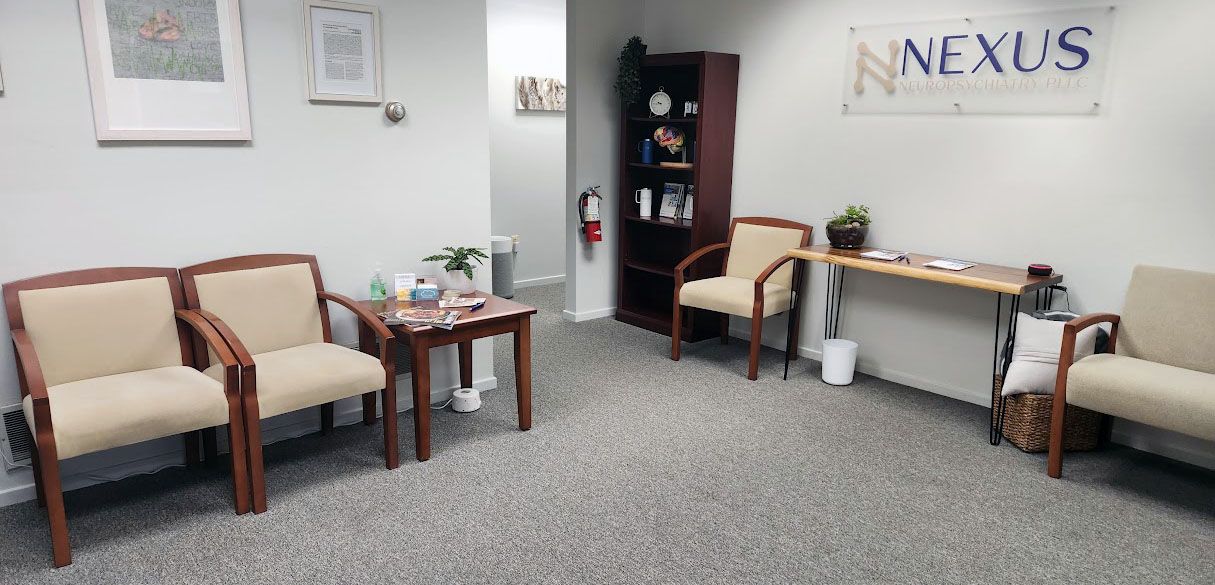
Why Rochester Patients Choose Nexus for PTSD Care
Nexus Neuropsychiatry is physician-owned and led by Dr. Shane Stegen DO and Dr. Nadine Mills MD, both board-certified interventional psychiatrists who also hold positions at University of Rochester Medical Center, and, respectively, Cayuga Medical Center and Livingston County Mental Health.
Dr. Stegen serves as a Senior Clinical Instructor for the Rochester Regional Psychiatry Residency. We follow the ASKP3 consensus guidelines for ketamine administration, and every infusion is monitored by a physician and a nurse trained specifically in ketamine care, with continuous vital sign monitoring throughout. Just as important to many of our patients: we are built to work alongside your existing care team, not replace it, so starting treatment here does not mean starting over with someone new.
Related Ways We Can Help
If IV ketamine sounds like the right fit, you can read more about what a session involves on our IV ketamine therapy page. If depression is part of your PTSD symptoms, our Spravato® (esketamine) treatment page covers that option in more depth. Every path starts the same way: an interventional psychiatry consultation where we review your history and build a plan together that fits your specific circumstance and need.
Ready to talk with someone who will listen to your full history before recommending a next step? Call
(585) 201-8508 or
request a consultation. We're open Monday through Friday, 10am to 7pm, by appointment.
Questions About PTSD Treatment? We’re Here to Help.
Many people exploring PTSD treatment often have similar questions. Please review our frequently asked questions, or feel free to call us for more information at: (585) 201‑8508